What we’re trying to do is to build a community-led movement to restore nature where we live. ~Pete Malinowski
Pete Malinowski was a terrible student.
So, of course, he became a teacher – to change how school could be for kids like him.
And that’s how he landed a teaching job at New York’s public Harbor School, on Governor’s Island in New York Harbor. Accessible only by ferry, the school caters to kids who plan to work in maritime careers.
His class? Oysters.
Well, Oyster Restoration (and Aquaculture), to be more specific.
Pete grew up farming oysters with his family on the Fishers Island Oyster Farm. His first memories are of working with oysters. He learned to drive a boat before he learned to ride a bike.
So he knows a lot about the bivalves that once covered the seafloor in New York Harbor.
When Europeans first arrived, 220,000 acres of oyster beds blanketed New York Harbor – estimated to be nearly half of the oysters in the entire world at the time. By the early 20th Century, Oysters were still so plentiful that around 1,000,000 were consumed daily by New Yorkers.
And that continued … until we ate them all.
And polluted the harbor they once called home.
That’s both tragic and monumentally stupid. Oysters are a keystone species with a supersized impact. As filter feeders, they clean our waterways. Just one oyster filters 50 gallons of water – the equivalent of an overflowing bathtub – every single day.
But that’s not all – these little living water filters also create the infrastructure that other creatures inhabit: reefs.
When oysters are born, they float along for two weeks before attaching themselves to their permanent home. In a perfect world they find another oyster (dead or alive) to attach to, allowing them to recycle the calcium from the shell of the old oyster to make their own.
In that way, oysters create vast communities of living reefs – which not only provide shelter for other animals and a thriving ecosystem all their own – but provide a breakwater that softens the impact of high waves.
Of course, that’s in a world in which oysters are undisturbed.
Could New York City – particularly New York Harbor – bring this keystone species back? Could New Yorkers – students at the Harbor School, volunteers, citizen-scientists, and even restaurants – work together to restore the oyster population?
That’s what Pete wanted to find out.
And the answer is yes. At least, so far.
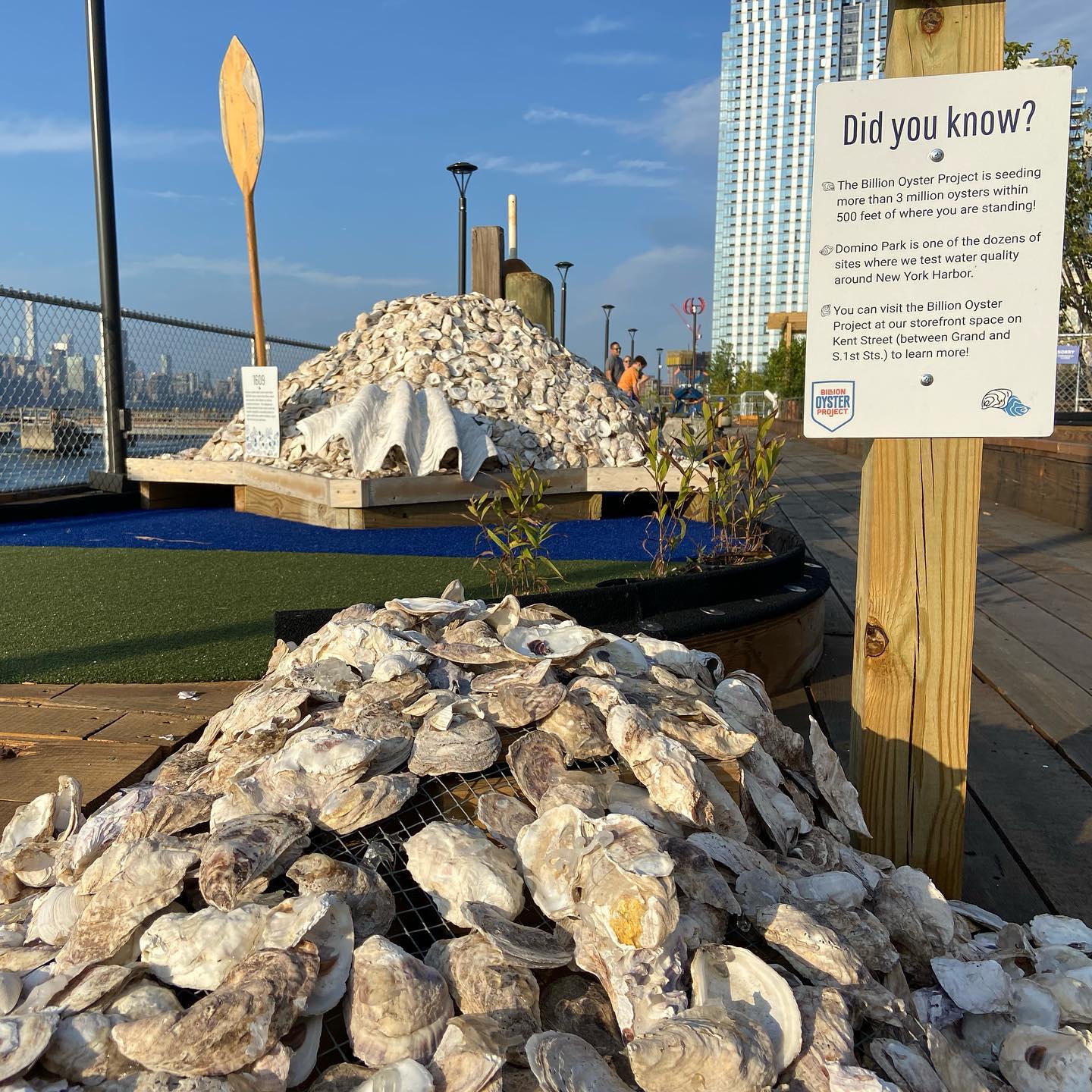
The Billion Oyster Project – borne of Pete’s goal to make Oyster Restoration a hands-on activity for his Harbor School students – has the goal of bringing (you guessed it) one billion oysters back to New York Harbor by 2030. Initially founded with Murry Fisher, the Harbor School’s director, it gives students the kind of in-the-field work that Pete himself would have done well with when he was that “terrible student” years ago.
And Billion Oyster continues to work closely with students – from the Harbor School and 100 additional partner schools in the five boroughs – teaching science “through the lens of New York City’s waterways.”
That would be wonderful on its own.
But Billion Oyster is not just a school project. Like the oysters it restores, it’s making a super-sized impact on the world around it.
By working with restaurants throughout the city to recycle the oyster, clam, and scallop shells it needs to populate with the baby oysters that it releases, Billion Oyster has recycled two million pounds of shells. (If you live in NYC and would like to recycle your own shells, you can drop them in the collection bin at the River Street Farm compost site located at River Street Farm Collective (105 River Street) in Williamsburg, Brooklyn).
By inviting members of the community to pitch in, it’s welcomed over 15,000 volunteers and citizen scientists who build oyster reef structures, prepare shells, and sort and count baby oysters. In doing so it’s changed their beliefs about what’s possible – and what they can personally do to help repair the damage humans have caused.
And by working with the Living Breakwaters project – a sort of green infrastructure in conjunction with the NY Governor’s Office of Storm Recovery (GOSR) – Billion Oyster is helping to recreate the vast oyster reefs that once reduced the impact of large ocean waves and protected against coastal erosion.
One teacher’s idea for engaging students grew into a community-wide project – with huge benefits for the wider community. And the world.
Billion Oyster has already restored 100 million oysters to NY Harbor. And even though they’ve got a long way to go, with the progress they’ve made (and with other water quality initiatives) they’re seeing huge benefits.
The water quality in New York Harbor is the best it’s been in over 100 years. In fact, it’s so good that if it were a beach, the Harbor would be open for half of the year.
Wildlife has returned. Seahorses, pipefish, pufferfish, and sea robins all have been spotted on and around the new oyster reefs. Pods of dolphins, flocks of northern gannets, blue herons, and bald eagles – all have been found in and around New York Harbor.
It’s remarkable.
Pete doesn’t teach at the Harbor School anymore, but that doesn’t mean he’s done teaching.
I, for one, learned a lot just by reading about the project he started.
But perhaps more importantly, I was inspired. And I thought you might be, too. As we watch the news about the climate get more and more dire, it’s easy to despair. It’s easy to throw up your hands and say: It’s too far gone. There’s nothing we can do.
But then you can look to this outrageous, outlandish idea of restoring One Billion oysters to New York Harbor. This idea a teacher cooked up to create a hands-on experience for kids has had near-immediate real-world impact.
And if tens of thousands of people care enough about New York Harbor (and oysters) to put on waders and shovel oyster shells for an afternoon, I think it’s clear that there’s muscle enough to accomplish darn near anything we can cook up.
It’s a great reminder that we can do hard things, when we work together.
We just need to dream big. And dig in.
Speaking of…
Let’s get to work.
Actions for the Week of July 25, 2023
More on Oysters!
Keen on learning more about Billion Oyster Project? Watch this PBS video: https://www.pbs.org/video/the-big-oyster-wild-hope-fyipex/
And check out their website here: Billion Oyster Project: https://www.billionoysterproject.org/
There are a variety of oyster-reef projects throughout the U.S. right now – like this coastal oyster restoration project in Maryland: https://storymaps.arcgis.com/stories/62246ed670914525a84041ad2e13749d. If you’re near Chesapeake Bay, you can even pitch in to volunteer at their oyster restoration project. Learn more here: https://www.cbf.org/about-cbf/locations/virginia/offices/hampton-roads/volunteer.html
Oh, hi, OHIO!
News is good out of Ohio right now, where voters are turning out in large numbers to vote against a measure that would change the threshold for voters to amend the state constitution from a simple majority to 60%.
This is a great start!
Now it’s time to double down.
Here are some things you can do to help turn out voters:
Live in or near enough to Cincinnatti for a road trip? Join Protect Choice Ohio on Wednesday to crowd canvass at the PINK concert – such a great way to get the word out to a lot of people all at once. Sign up here: https://www.mobilize.us/mobilize/event/572204/
Join Ohio Progressive Action Leaders for phone banks! Times and dates available on M/W/Sunday from now through the end of voting on August 8. OPAL is a fabulous group to be part of and they need all the help they can get. Sign up here: https://www.mobilize.us/mobilize/event/568468/
Join Postcards to Voters and write postcards to turnout voters in Ohio. Get in on the fun by emailing Join@TonyTheDemocrat.org or by texting JOIN to 484-275-2229
Citizen Science!
I’m always excited to see citizen science projects – ways for regular folks like you and I to participate actively from our own communities and crowdsource essential data.
Somehow, this kind of information gathering feels especially important right now, doesn’t it?
Here’s an excellent list of opportunities – from backyard birds to freshwater streams – compiled by National Geographic: https://education.nationalgeographic.org/resource/citizen-science-projects/
And more from the Smithsonian!: https://www.si.edu/volunteer/citizenscience
WHEW! GO TEAM!
P.S.: Why don’t you make someone’s day and send this pep talk to a friend or two? I bet they need it.
If you’d like to sign up to get this pep talk and action list in your in-box each week, you can do that here. Welcome, friend!
P.P.S.: If you want to help support this work you can do so via Patreon at
https://www.patreon.com/smalldeedsdone or via paypal at https://www.paypal.me/smalldeeds
My deepest gratitude in advance.
Thank you for reading. Thank you for writing. I read and respond to every email! We’re in this together. Don’t you forget it.
 Small Deeds Done
One thought on “A Feel-Good Story About … Oysters? Yes. Oysters.”